The EPA Investigation | Ban 1080
[INVESTIGATION BRIEF: EPA ENFORCEMENT]

A BROKEN SYSTEM

For 8 months, mandatory but non-compliant 1080 poison signs endangered a public park. The EPA's response was just a warning. We investigated why.

Demand Accountability
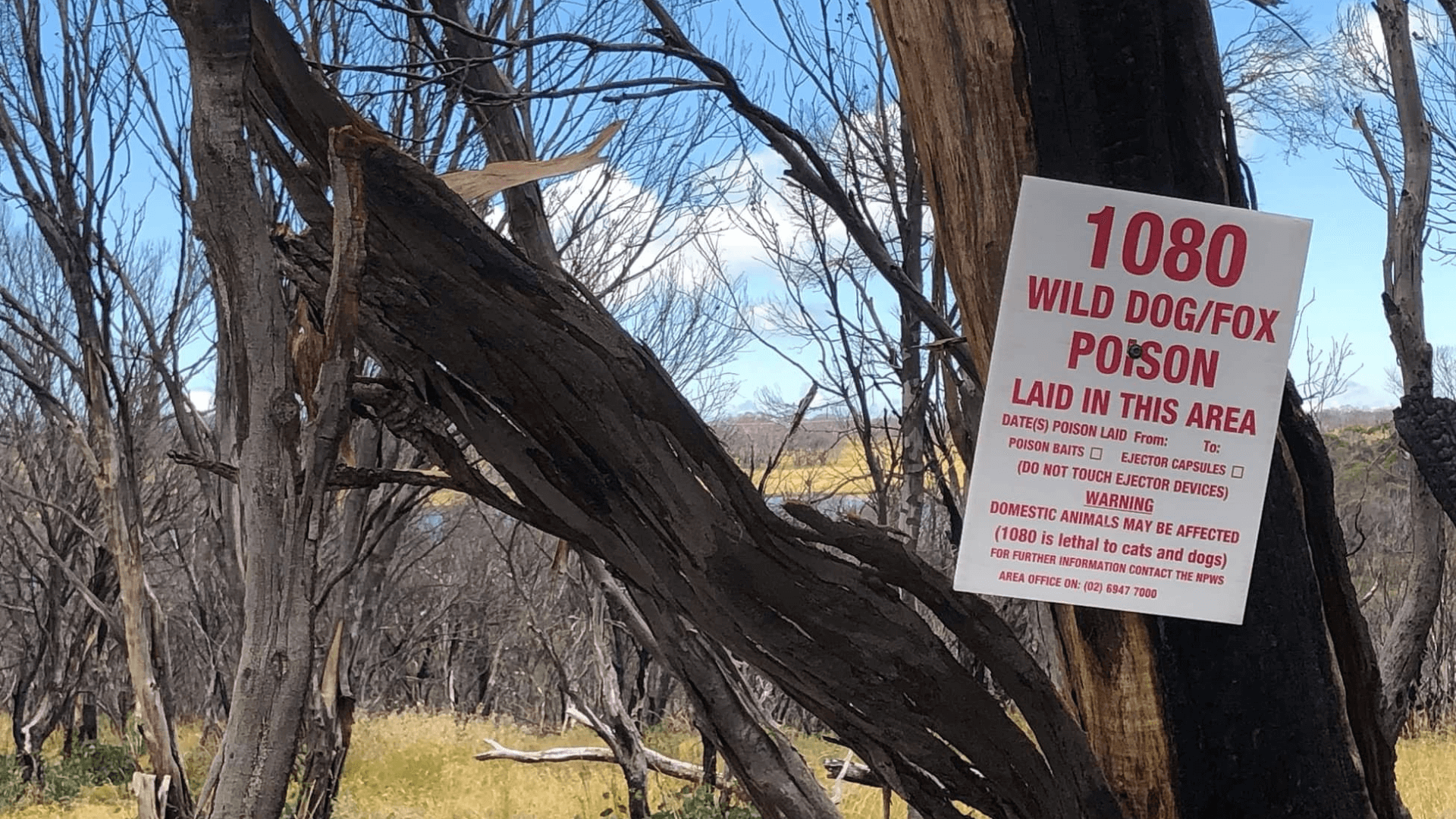
A 1080 poison warning sign nailed to a tree in a public park.

Case Preamble: EPA-23365

In a public park, mandatory 1080 poison warning signs were found to be completely non-compliant, leaving the community and their much-loved companion animals dangerously unaware of a lethal threat. Local wildlife was also exposed to this toxic and lethal risk. The EPA's response raised immediate red flags.

[LOGGED: DAY 01]
The Incident: Lethal 1080 poison baits laid with blatantly or alarmingly non-compliant warning signage near a public recreation area.
[ESCALATED: DAY 240+]
The Breach: Signs remained non-compliant for over 8 months, blatantly violating the NSW Pesticide Control Order.
[CLOSED: EPA-23365]
The Resolution: The EPA closed the case with only an advisory warning. No fines. No penalties. No accountability.
[ACTION: GIPA FILED]
Our Investigation: We realised this wasn't an isolated failure. We filed formal GIPA requests to force the EPA to hand over statewide enforcement data.

WARNING ONLY
EXHIBIT A: WORRIGEE INCIDENT
Case Ref: EPA-23365
Violation: Signage Non-Compliance
Duration: 240+ Days
Penalty Issued: $0.00

System.Evidence_Archive

GIPAA results obtained by the Coalition Against 1080 Poison documenting NSW EPA enforcement of the Pesticide Control (1080 Bait Products) Order 2020 · Jan 2020 – Oct 2024

Enforcement Action by Category Source: EPA1058A · Jan 2020 – Oct 2024
No recorded action 93 cases
Advisory letter 26 cases
Resolved through education or guidance 16 cases
Formal warning 4 cases
Official caution 2 cases
Clean up notice 0 cases
↳ Penalty notice — cases involving confirmed non-target animal death or injury 0 of 67
Penalty notice (total, all cases) 1 of 117

117 documented PCO breaches · Jan 2020 – Oct 2024 · Response totals exceed breach count — multiple enforcement responses may be issued per case

Regional Intelligence // EPA1058A Geographic Analysis

Where the System Is Failing

EPA1058A breach data maps regulatory failure across NSW — with clear hotspots in both remote agricultural zones and densely populated peri-urban and coastal areas where missing notifications and warning signs pose the highest risk to companion animals.

Local Government Area Cases Relative Scale %
CENTRAL COAST peri-urban 8
6.8%
INVERELL SHIRE 6
5.1%
ARMIDALE REGIONAL 5
4.3%
BEGA VALLEY coastal 5
4.3%
CLARENCE VALLEY 5
4.3%
WALCHA 5
4.3%
UPPER LACHLAN SHIRE 5
4.3%
GLEN INNES SEVERN 4
3.4%
QUEANBEYAN-PALERANG 4
3.4%
PORT MACQUARIE-HASTINGS coastal 3
2.6%
COFFS HARBOUR coastal 3
2.6%
LITHGOW CITY peri-urban 3
2.6%
DUBBO REGIONAL 2
1.7%
Source: EPA1058A dataset (GIPA release) — Reported breaches Jan 2020 – Oct 2024. Bar widths scaled relative to highest LGA (Central Coast, 8 cases). Table shows the 12 highest-breach LGAs plus Dubbo Regional. Remaining cases distributed across other NSW LGAs not listed.
0/12
penalty notices across the 12 highest-breach LGAs in NSW. The enforcement gap is absolute — and it is statewide.
⚠ Peri-Urban & Coastal Risk Zones

Breaches in Central Coast, Bega Valley, Port Macquarie-Hastings, and Lithgow City are particularly alarming. These are areas where residential properties directly border baiting locations. When notification and signage requirements are breached here, pets face lethal exposure with zero warning.

Cross-Political Dimension

Breaches span both conservative rural strongholds (Dubbo, Inverell, Walcha) and progressive coastal regions (Central Coast, Bega Valley). This is not a regional issue — it is a statewide regulatory failure that crosses diverse community lines.

The Forensic Dossier

We filed formal GIPA requests to uncover how the NSW EPA monitors this Schedule 7 poison that the Attorney-General's Department has identified as a "chemical of security concern". We discovered an agency that refuses to punish offenders, and worse — an agency that doesn't track its own failures.

117
breaches → 1 fine
A 0.85% penalty rate for a Schedule 7 poison. Maximum fine available: $120,000.
0/67
animal deaths → 0 fines
57.2% of reports involved confirmed animal death or injury. Not one resulted in a penalty notice.
7/7
no records held
GIPA requests on oversight practices. Every single one returned: "No records held."
75↓
staff cuts, 2025
Roles eliminated from an agency already too slow to investigate before evidence degrades.
REQUEST REFS: GIPA EPA1058A & GIPA EPA1118
SUBJECT: 1080 POISON REGULATORY COLLAPSE
Part I: The Enforcement Gap
[DATA EXTRACT]
Systemic Failure to Penalise
Dataset Analyzed (EPA1058A): Statewide 1080 Enforcement Outcomes (Jan 2020 – Oct 2024)
The Finding: Across four years, the EPA recorded 117 breaches of the NSW 1080 Pesticide Control Order. Despite maximum corporate penalties of $120,000, there was only 1 penalty notice issued across 117 breaches. The remaining 99% of offenders received warnings, educational letters, or "No Action".
[DATA EXTRACT]
Lethal Consequences Ignored
Dataset Analyzed (EPA1058A): Incident Severity & Procedural Breaches
The Finding: The failure to enforce basic signage and distance rules has a direct, lethal cost. The dataset reveals that 57.2% of reports involved animal deaths with near-zero punitive outcomes. Of those 67 confirmed animal death or injury cases, the EPA issued zero penalty notices.
[DATA EXTRACT]
Investigative Latency
Dataset Analyzed (EPA1058A): Case Timelines and Resolution Delays
[ Legal Requirement ] Warning signs: 4 weeks The NSW 1080 Pesticide Control Order requires warning signs to remain posted for a minimum of four weeks after baiting concludes. After that, operators are legally permitted to remove them.
[ EPA Response Time ] Case resolution: 6–17 months EPA1058A records show individual breach cases taking between six and seventeen months to resolve — consistently concluding with an advisory letter or no action.
[ Structural Consequence ] Evidence is gone before anyone arrives. An agency that takes 17 months to investigate a signage breach — when the legal requirement to display that sign expired after 4 weeks — cannot enforce the rule it is responsible for. This is not a resourcing problem. It is a structural design failure.
Corroborating case (EPA1058A): Case opened: 26/09/2023 · Closed: 18/03/2025 · Duration: 17+ months · Resolution: Advisory Letter
NSW Environment Protection Authority
1080 Pesticide Control Order — Oversight Compliance Register
GIPA EPA1118
Responded: 3 July 2025
Form Ref EPA1118
Period Covered Jan 2020 – Oct 2024
Fields Completed 0 of 7
Form Status INCOMPLETE
Instructions: Complete all fields using data held in the EPA's pesticide compliance management system for the period specified above. This register is required under the Pesticides Act 1999 oversight obligations. Where no data is held, provide an explanation of why the record does not exist.
4.1 Non-Target Animal Poisonings & Enforcement Statistics
statistics on all reported non-target animal poisoning incidents linked to 1080 baiting activities, and the number of these incidents resulting in any enforcement action, for the period January 2020 to October 2024.
No records held. The EPA does not have any records that describe the requested statistics. NULL
2.1 Number of Formal Investigations Initiated
total number of 1080-specific complaints or reports received by the EPA, and the number of formal investigations initiated as a result, for the period January 2020 to October 2024.
No records held. The EPA does not have any records that describe the number of formal investigations initiated. NULL
8.1 Record-Keeping Audit Methods & Enforcement Actions
details of any audits or reviews conducted of the EPA's 1080 breach record-keeping systems, including any resulting enforcement actions or procedural improvements, for the period January 2020 to October 2024.
No records held. The EPA does not have any records as described. NULL
9.1 Proactive Compliance Monitoring & Inspections
details of any proactive compliance monitoring programs, campaigns, audits, or targeted inspection initiatives specifically focused on 1080 PCO compliance, including dates, regions covered, and findings.
No records held. The EPA does not have any records as described. NULL
10.1 Audits of Authorised Control Officers (ACOs)
information on any audits, reviews, or enforcement actions relating to Authorised Control Officers employed by LLS or NPWS who were found to be in breach of the 1080 PCO.
No records held. The EPA does not have any records as described. NULL
11.1 Regional & Annual Enforcement Breakdowns
a breakdown of 1080 enforcement activity by NSW region and by calendar year, including the number of complaints received, investigations initiated, and enforcement actions taken, for the period January 2020 to October 2024.
No records held. The EPA does not have any records as described. NULL
13.1 Regulatory Definitions & Standards Used in Enforcement
the EPA's internal definitions for key terms used in compliance and enforcement reporting, including "substantiated breach," "formal investigation," and "enforcement action."
No records held. The EPA does not have any records as described. NULL
[NO RECORD]
Non-Target Animal Poisonings
Request Extract (Item 4): "...statistics on all reported non-target animal poisoning incidents linked to 1080... and the number of these incidents resulting in any enforcement action."
NO RECORDS HELD
EPA Official Response (3 July 2025): "The EPA does not have any records that describe the requested statistics..."
[NO RECORD]
Formal Investigations
Request Extract (Item 2): "...the total number of 1080-specific complaints or reports received, and the number of formal investigations initiated as a result for the same period."
NO RECORDS HELD
EPA Official Response: "...The EPA does not have any records that describe the number of formal investigations initiated."
[NO RECORD]
Proactive Inspections
Request Extract (Item 9): "...details of any proactive compliance monitoring, campaigns, audits, or targeted inspection initiatives focused on 1080 PCO compliance..."
NO RECORDS HELD
EPA Official Response: "The EPA does not have any records as described."
[NO RECORD]
Audits of Authorised Officers
Request Extract (Item 10): "...information on any audits, reviews, or enforcement actions relating to Authorised Control Officers (ACOs)..."
NO RECORDS HELD
EPA Official Response: "The EPA does not have any records as described."
[NO RECORD]
Regulatory Definitions
Request Extract (Item 13): "...the EPA's definitions for key terms used in compliance and enforcement reporting (e.g., 'substantiated breach')."
NO RECORDS HELD
EPA Official Response: "The EPA does not have any records as described."
[STRUCTURAL BREACH]
The Gatekeeper Is the Operator
How The System Is Designed: Authorised Control Officers (ACOs) — employed by Local Land Services (LLS) and NPWS — are the only individuals permitted to prepare and supply 1080 baits. They are the regulatory gatekeepers, required to verify mandatory training and conduct risk assessments before every supply.
The Structural Conflict: The ACO's employer is often the same agency laying the baits — LLS and NPWS both supply the poison and deploy it. The gatekeeper and the operator are one. EPA1058A confirms ACOs themselves have committed PCO breaches, yet the EPA holds zero records of any disciplinary action against a single ACO. This creates a two-tier enforcement system where government agencies are effectively exempt from the rules they are supposed to enforce.
[LOOPHOLE]
The "As Far As Possible" Clause
What The PCO States (Sch. 1, Pt. 11): Users are required to recover poisoned animal carcasses "as far as possible" and dispose of them by burial. No objective threshold for compliance is defined.
Why This Is a Lethal Loophole: Toxic carcasses are the primary vector for secondary poisoning of scavenging native species, including the Spotted-tailed Quoll. The phrase "as far as possible" is unenforceable — any user can claim recovery was impractical. There is no evidence the EPA has ever prosecuted a breach of this clause. In practice, protection of native scavengers from secondary poisoning is entirely voluntary and unverifiable.
[STRUCTURAL DESIGN FAILURE]
The Evidence Window Is Closed Before Investigation Begins
The Legal Framework (PCO 2020): Warning signs are required for a minimum of four weeks after baiting concludes. Once that period expires, operators are legally permitted to remove all physical evidence of the baiting program.
[ Evidence Window ] Signs legally required: 4 weeks After four weeks, warning signs may be lawfully removed. All physical evidence that a baiting program occurred — and whether it complied with notification requirements — disappears from the site.
[ Agency Response Time ] EPA case resolution: 6–17 months EPA1058A records show breach cases taking between six and seventeen months to resolve. By the time a case is closed, the evidence window expired more than a year earlier.
[ Structural Consequence ] Signage breaches are structurally unenforceable. The two most common breach categories — missing notifications and inadequate warning signs — are the ones most directly linked to companion animal deaths. They are also the ones where evidence is legally permitted to vanish before the EPA's investigation begins. This is not an operational gap. It is a structural design that makes enforcement of the most lethal breaches impossible.
Late-Breaking Development: Systemic Threat Assessment — Updated 2025
[SYSTEMIC THREAT]
75 Staff Roles Cut from an Already Failing Agency
EPA CEO Statement (Nov 2025): CEO Tony Chappel announced a proposed organisational change to achieve a "financially sustainable EPA model," resulting in a net reduction of 75 staff roles — approximately 8% of the ongoing workforce.
The Implication: An agency already unable to investigate 1080 breaches within the 4-week signage window is now structurally smaller. Field officers in high-breach regions like Dubbo will spend more time on internal administration and less time on the proactive site inspections that 1080 monitoring demands. This is not a future risk — it is a documented, accelerating failure.
[LEGISLATIVE CHANGE]
The Reporting Bar Just Got Five Times Higher
Mandatory Reporting Environmental Legislation Amendment Act 2025: The Act raised the financial threshold for mandatory pollution notification fivefold — meaning many lower-value incidents that previously triggered a duty to report may no longer do so.

If the state's premier environmental regulator cannot issue more than one fine in five years for the lethal misuse of a dangerous poison — and is now cutting staff while raising reporting thresholds — it has no standing to permit the continued use of that poison.

Exhibit B: Non-Target Casualties

The Real Cost of Regulatory Failure

This is Doble. A 10-month-old pet who never made it home. He found a 1080 bait at a remote campsite—an area left without a single mandatory warning sign.

CLASSIFICATION: "NON-TARGET INCIDENT"

"The official report calls his death one of 36 non-target incidents. His family calls it a preventable tragedy."

His horrific, preventable death is the direct consequence of the EPA's failure to proactively audit and strictly enforce its own rules. Without strict enforcement, every community near bushland is at risk.

Read Doble's full story in The Guardian →
A photo of Doble, a beloved pet bull arab-cross who was a victim of 1080 poisoning.
Victim Profile
[ ACTION REQUIRED ]

Demand An Independent Audit

The evidence is clear: the EPA's current approach is failing. A system that doesn't track its own investigations cannot be trusted to oversee the use of a lethal Schedule 7 poison. Public safety and our animals are at severe risk.

Join us in demanding an immediate, independent audit into the EPA's enforcement of 1080 poison regulations. Use the official submission terminal to send a direct message to the NSW Minister for the Environment, the NSW Minister for Agriculture, both Shadow Ministers, and the EPA's Chief Executive Officer in under 30 seconds.

Submit Directive