Public warning.
Made usable.
A proposed national standard for the public warning and disclosure of government-authorised 1080 baiting programs.
If governments publish 1080 baiting information, people should be able to find it, understand it and use it—before, during and after an operation. TP-101 sets out what meaningful disclosure should require.
Proposed standard for consideration and adoption. It does not itself create legal obligations.

Published doesn’t always mean usable.
The public cannot make informed decisions about 1080 baiting when key details are scattered, unclear or no longer accessible.
Australia’s government-authorised baiting programs operate under different administrative and regulatory systems. Publication practices vary by jurisdiction, agency and program. TP-101 responds to that inconsistency with a proposed common minimum.
Explore the national transparency context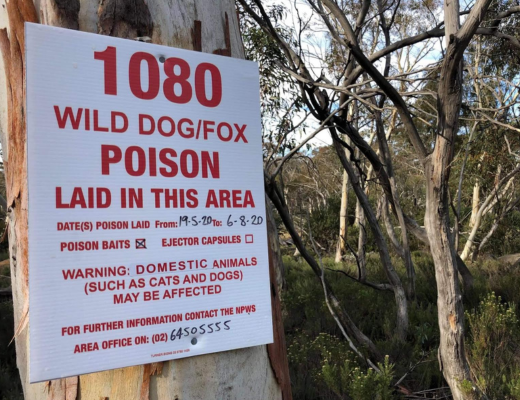
What fragmented disclosure can look like
- 01
Records are spread across separate maps, notices, agency pages and registers.
- 02
Operational areas are too broad to understand where baiting may occur.
- 03
Dates, current status or changes cannot be clearly identified.
- 04
Historical records disappear when an operation or warning period ends.
TP-101 moves the discussion from what governments publish to what the public can actually use.
Five principles. One public test.
TP-101 places usability at the centre of public warning, not just the technical act of placing information online.
Could a reasonable member of the public, without prior knowledge of the program, locate, understand and use the published information?
Findable
A reasonable person can discover the public record without knowing which agency or internal program term to search.
Specific
The record is precise enough to understand what is happening, where and when.
Current
Program status and material changes are communicated clearly and kept up to date.
Preserved
Cancellation or completion does not erase the public history of the program.
Reusable
Core information can be reliably used in registers, maps, datasets and public-interest work.
What should every 1080 warning tell you?
TP-101’s Mandatory Information Schedule brings the essential public information into one practical reference. These are summaries—read Chapter 4 for the full requirements.
12 categories / One identifiable principal record or clearly connected group of records.
- 01CATEGORY
Program identity
A unique identifier, public-facing name and concise description.
- 02CATEGORY
Responsibility
The responsible agency, any materially different operator, and a public contact.
- 03CATEGORY
Status
Current operational status and the relevant date.
- 04CATEGORY
Purpose
The stated program purpose and animals intended to be targeted.
- 05CATEGORY
Timing
Expected period, actual dates where known, and whether dates are confirmed or indicative.
- 06CATEGORY
Poison
Clear identification of sodium fluoroacetate (1080).
- 07CATEGORY
Method
How the bait is distributed or deployed.
- 08CATEGORY
Location
A usable operational area with recognisable geographic context.
- 09CATEGORY
Access & safety
Relevant warnings, closures, restrictions, precautions and authoritative advice.
- 10CATEGORY
Publication
The authoritative source, initial publication date and latest material update.
- 11CATEGORY
Reporting
A pathway for disclosure errors, distinct from urgent incident or exposure reporting.
- 12CATEGORY
History
Material changes, cancellation or completion, and access to past records.
A notice exists. But can it be used?
Compare a limited hypothetical notice with the information a TP-101-aligned disclosure record would make available. This is illustrative, not an evaluation of a real government program.
Choose an example to see the same eight information fields.
A warning exists.
“1080 baiting may occur in the surrounding district.”
A usable public record.
Information that people can locate, check and revisit.
A warning should provide information people can find, understand and revisit — not just a broad statement that baiting may occur.
Important distinction: TP-101 is a proposed public-disclosure standard, not a determination of whether any specific existing notice complies with current law. These are hypothetical examples, not real public notices.
Review all 12 requirementsBefore. During. After.
Good public warning is a process, not a notice that disappears when an operation is over.
Advance disclosure
Publish the planned operation sufficiently early to provide meaningful warning, subject to applicable legal notification periods and genuinely short-notice circumstances.
Keep it current
Make the operational status clear and update material changes to locations, timing, methods, access restrictions and safety information.
Preserve the record
Show cancellation or completion, distinguish any continuing warnings, and retain a searchable public history of the program.
Completion of a warning period should not erase the public record.
A practical framework governments can adopt.
TP-101 is designed to support nationally consistent outcomes while allowing governments to implement the standard through the mechanisms appropriate to their jurisdiction.
Proposed national standard for usable public warning and disclosure
A national minimum
A consistent baseline for what public information should be disclosed. TP-101 does not impose a single national software platform.
Stronger rules remain
Existing legislation, notices and other requirements providing stronger public protection or more complete disclosure should continue to apply.
Adopt or adapt
Governments can implement the proposed outcomes through appropriate legislative, regulatory, contractual or administrative mechanisms.
The Coalition is asking the Commonwealth ministers responsible for agriculture and the environment to raise consistent 1080 public-warning requirements with state and territory counterparts through appropriate intergovernmental forums, including the Agriculture Ministers’ Meeting and Environment Ministers’ Meeting. TP-101 would be put forward as a starting point for consideration—not as an agreed standard or an existing legal obligation. The Coalition is also seeking a public response and clear next steps.
Publication status: TP-101 is a proposed standard for policy consideration and government adoption or adaptation. It has not itself been adopted as Australian law and does not independently create legal obligations. Consult the linked PDF for its current published version and document details.
A national standard needs government action.
TP-101 sets out a practical framework for clearer, more consistent public warning and disclosure of government-authorised 1080 baiting.
We are asking the federal ministers responsible for agriculture and the environment to bring TP-101 to relevant discussions with state and territory counterparts, including the Agriculture Ministers’ Meeting and Environment Ministers’ Meeting. Federal Opposition representatives are being asked to support the proposal’s consideration and scrutinise progress.
TP-101 is a proposal, not an existing legal requirement. The request is for an accountable process to consider nationally consistent disclosure, identify next steps and report publicly on progress.
Read the standard.
TP-101 — Proposed National Standard for Public Warning and Disclosure of Government-Authorised 1080 Baiting Programs.
Read the primary publication for exact requirements, recommendations, definitions, scope and implementation provisions. This page provides a plain-language overview and does not replace the document.
The PDF opens in a new tab. Your browser may offer a download option. The file linked here is the supplied final-publication URL.
Inside TP-101
Eight chapters + mandatory information scheduleExplore the chapter summaries below. Select any chapter to see what it covers; the full requirements are in the PDF.
01Purpose, status and scope
Defines the standard’s aims, its application to government-authorised programs, and how it relates to stronger legal requirements.
Open the full TP-101 PDF02Definitions and principles
Defines key terms and sets out the Public Usability Test and principles for interpreting the requirements.
Open the full TP-101 PDF03Responsibility and timeliness
Establishes agency accountability, a principal record, advance disclosure, updates and continuation of warnings.
Open the full TP-101 PDF04Minimum disclosure requirements
Specifies program identity, timing, method, animals targeted, location, safety, publication and reporting information.
Open the full TP-101 PDF05Publication and accessibility
Sets expectations for findability, accessibility, completeness, authoritative sources and consistent information.
Open the full TP-101 PDF06Location accuracy and mapping
Addresses precise operational boundaries, geographic context, public maps and reusable spatial information.
Open the full TP-101 PDF07Preservation and history
Explains how records remain discoverable after operations end and why links and history should persist.
Open the full TP-101 PDF08Adoption and review
Outlines adoption, phased implementation, national consistency, periodic review and public feedback.
Open the full TP-101 PDFPublic disclosure should be built into the system.
TP-101 moves the campaign from documenting inconsistent disclosure toward a practical standard governments can consider, adapt and adopt.
Ask for national reform
Ask federal agriculture and environment leaders to initiate intergovernmental consideration of TP-101, support a national minimum and report publicly on progress.
Read and share TP-101
Use the full publication in policy discussions, correspondence, reporting and public advocacy.
Open publicationExamine the evidence
Explore the 1080 Watch Map and the national transparency context behind the need for stronger disclosure.
Visit 1080 WatchRaise a concern
Find official reporting pathways for suspected misuse, poisoning incidents or inadequate warning information.
Find official contactsSafety: A public-information page is not an operational warning service. For current risks, consult responsible agencies, official notices and local signage. Do not enter baiting areas or approach bait material to gather evidence.